The sound of a leak, and why it travels
A pinhole leak in a pressurized pipe turns water into a thin jet, and that jet vibrates the pipe wall. The vibration moves along the pipe and into the surrounding material, which is why the sound can be picked up on a valve, a hydrant or a floor some distance from the leak.
Metal pipes carry the sound well. Plastic pipes absorb a lot of it, which is why detection on plastic lines often needs more care and a quieter site.
The equipment, in plain terms
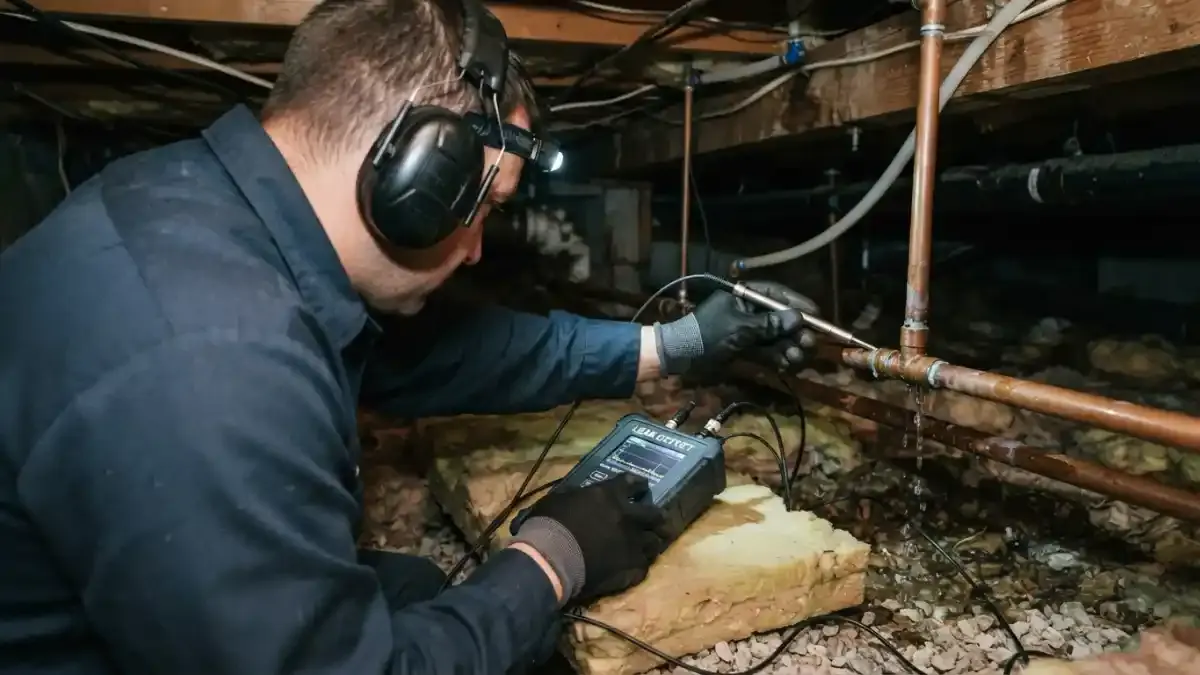
A kit for acoustic work usually includes a handful of pieces that work together.
- A ground microphone that rests on the floor or soil to listen for the leak sound.
- A contact probe that touches valves, fixtures and exposed pipe.
- Headphones and a filter that removes background rumble such as traffic or a furnace.
- A correlator, which uses two sensors on a pipe to calculate the leak location from the sound's travel time.
- A pipe locator to trace the buried line path before listening.
The sequence a technician follows
First comes a meter check. If the meter moves while every fixture is off, a leak exists somewhere downstream of the meter. Next the technician isolates the house piping from the service line by closing the main valve and watching the meter again.
Then the listening starts. The technician tests at the meter, the shutoff, the water heater connections and any exposed pipe, then narrows the search area with the ground microphone. Marking the spot comes last, and good crews confirm it with a second method before anyone cuts a wall or breaks a slab.
When the sound is the wrong clue
Acoustic methods struggle in noisy places. A running dishwasher, a neighbor's sump pump or traffic on a nearby road can mask a leak. A leak on a plastic line may be too quiet to hear at all. A very slow drip may not make enough sound to register.
If you suspect a leak behind a wall and you see a ceiling stain growing, turn off the main valve first and then call. Listening can wait until the water stops.
Where acoustic work fits among the other methods
No single tool finds every leak. The table shows how a technician chooses.
| Method | Best for | Weak spot |
|---|---|---|
| Acoustic listening | Pressurized supply lines, metal pipe, service lines | Plastic pipe, very small leaks, noisy sites. |
| Thermal imaging | Hot water lines, radiant heat, wet insulation | Cold lines and thick walls. |
| Moisture meter | Confirming damp drywall and subfloor | Cannot tell where water enters. |
| Tracer gas | Small leaks in dry or plastic systems | Needs a sealed test section. |
| Pressure test | Confirming that a line holds or loses pressure | Does not give a location. |
Leaks under slabs and in buried lines
A leak under a slab or in a buried service line is the classic acoustic job. The pipe is hidden, the cost of guessing is high and a few minutes of listening can save a jackhammer. Correlator readings narrow the leak to a few feet, and the locator confirms the pipe path above it.
A technician who marks a spot should also tell you how confident the reading is. A good report names the method, the noise level on site and whether a second method agrees.
What you can do before the technician arrives
Simple preparation improves the odds of a clean reading.
- Turn off dishwashers, washers and any running fixtures.
- Write down the water meter reading, wait twenty minutes with all water off, and read it again.
- Note any wet spots, warm floor patches or sounds of running water you can hear at night.
- Clear access to the main shutoff and the water heater.
- Tell the technician if the house has plastic, copper or galvanized pipe.
Reading the report afterward
The report should state where the leak is, which method found it and what the repair options are. If a wall or floor needs to be opened, ask for the smallest opening that gives access. If the answer is that the service line is leaking, ask for the repair plan before the excavation date.
Keep the report. It supports an insurance claim, a seller disclosure or a conversation with the water utility.
Westborough, MA note: wells, a reservoir and corrosion control
Westborough's water comes from groundwater wells and the Westboro Reservoir, according to MassDEP's older source water assessment, and the system uses corrosion control chemicals. That treatment helps protect pipes, but it does not stop a joint from failing or a pipe from being nicked during a renovation.
The practical point: a rising water bill is a signal to test the meter before you assume the rate changed. The Westborough Water Department can tell you about current billing and the annual water quality report.
Westborough also has the headwaters of the Sudbury and Assabet rivers and several ponds, including Lake Chauncy. Water on a lawn near a pond is not automatically a pipe leak, so a technician confirms with the meter before digging.
Acoustic listening is one instrument in a larger kit, and the best results come from pairing it with a meter test and a second method. Leak detection service in Westborough uses that sequence, and if the result points to the buried line, water line repair is the next step. The same dispatch reaches Grafton and Hopkinton.
Acoustic leak detection: questions answered
It can narrow a leak to a few feet on pressurized metal lines when the site is quiet. Accuracy drops on plastic pipe, in noisy environments and for very small leaks, which is why a second method should confirm the spot.
Sometimes. Plastic absorbs sound, so signals are weaker and travel less far. Technicians may combine acoustic work with tracer gas or a pressure test.
Only after the leak is located and confirmed. A good crew keeps the opening as small as possible and tells you what it will repair afterward.
Simple cases take an hour or two. Buried line or slab work can take half a day because the crew first isolates the system, traces the pipe and then listens at several points.
Check the meter with all water off and write down the reading. If it moves, you probably have a leak. Ask the Westborough Water Department about billing questions and call a licensed plumber to locate the leak.
Want a licensed plumber to look at it? Call (508) 389-4045
Plumbing problem in Westborough?
Call dispatch any hour and get a clear price before work starts.