
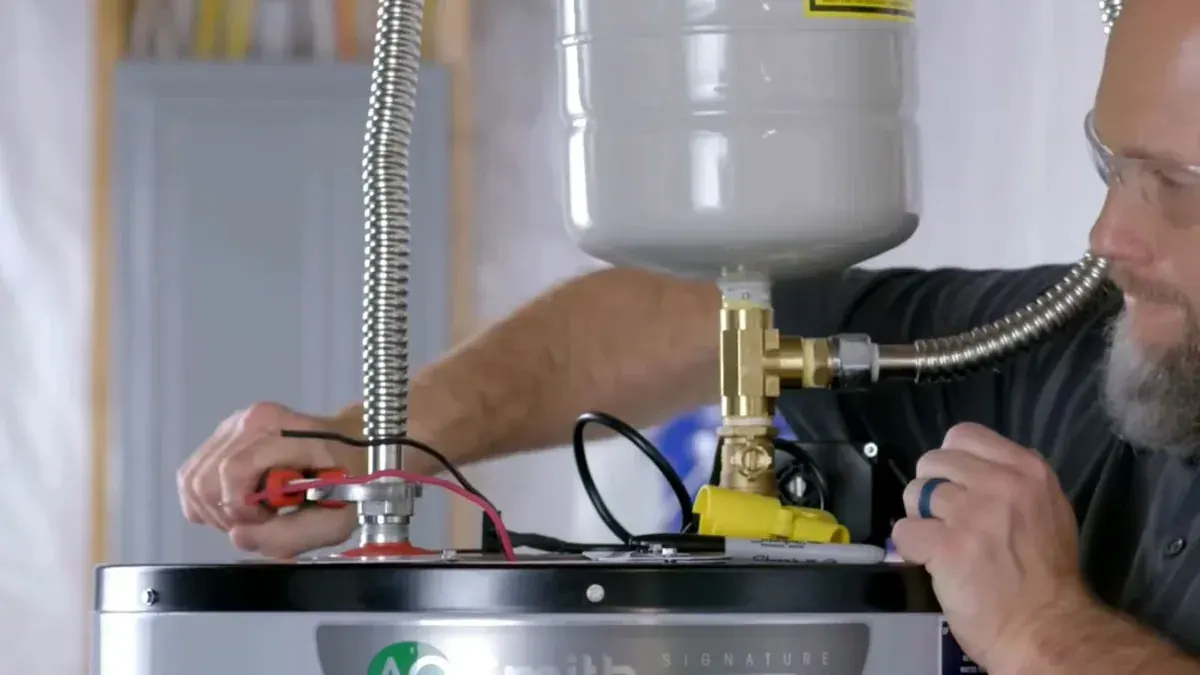
Water around the base of the tank: where it is really coming from
A puddle under a water heater sends most people straight to the word replacement. Sometimes that is right. Often the water comes from a fitting on top of the tank, a drain valve that is weeping, or condensation on a cold basement floor.
The only leak that condemns a tank is water escaping from the steel shell itself. That happens when the inner lining has rusted through, and no repair will fix it. A technician traces the water upward from the floor, drying each fitting with a rag and watching for the first bead to reform.
Fittings, the temperature and pressure relief valve, and the drain valve are all repairable in one visit when the tank is otherwise sound. Telling those leaks apart from a failed shell is the first job, and it usually takes less than fifteen minutes.
No hot water at midnight: the first ten minutes
Hot water failures feel urgent in a New England winter, and a leaking tank can flood a finished basement quickly. Both are emergency calls here, and the line is staffed around the clock.
While you wait for a licensed plumber, the steps below limit damage and keep the visit short.
- If water is pouring from the tank, close the cold water shutoff valve on the pipe entering the top of the heater, or shut the main valve if that one is stuck.
- Turn an electric heater off at its breaker. Turn a gas heater control to the off or pilot position, but only if the area around it is dry and you smell no gas.
- If you smell gas, leave the building and call the gas utility or 911 before you call a plumber. Do not flip switches on your way out.
- Move boxes, cords and anything electrical off the floor near the tank, and set a bucket under any slow drip.
- Write down the brand, the tank size in gallons and the manufacture date on the rating label. It speeds up parts and tells us the age.
Reading the symptom: what each one usually points to
Callers describe the problem in plain terms, and the symptom narrows the cause quickly. The table lists the patterns that come up most on residential tanks, with the usual outcome.
| What you notice | Usual cause | Typical outcome |
|---|---|---|
| Lukewarm water that runs out fast | Failed lower element on an electric tank, or sediment on a gas tank | Repair, often same visit. |
| No hot water at all, gas tank | Pilot out, bad thermocouple or failed gas control | Repair if the tank is sound. |
| No hot water at all, electric tank | Tripped high-limit switch, dead thermostat or element | Repair, parts usually on the truck. |
| Popping or rumbling noise | Sediment baked on the bottom of the tank | Flush now, or replace if very old. |
| Water pooling under the tank | Fitting, drain valve or relief valve, or a rusted shell | Repair, or replace if the shell leaks. |
| Rusty or brown hot water only | Corroded tank interior or spent anode rod | Anode check, replace if corroded. |
| Relief valve dripping | Thermal expansion pressure or a worn valve | Expansion tank or new valve. |
Gas, electric and hybrid tanks fail in their own ways
The fuel type decides what gets checked first, so the repair path differs even when the complaint sounds the same.
Gas tanks
A gas heater depends on a flame, a flue and a gas control valve. The thermocouple proves the pilot is lit, and a worn one shuts the gas off without warning. We also look at the flue draft, because a poor draft can push combustion gases into the room, and that is a safety stop, not a quick fix.
Electric tanks
An electric tank usually has an upper and a lower heating element, each with its own thermostat. When the lower element dies, you get a short supply of hot water and then cold. A tripped high-limit reset button on the upper thermostat is another common cause, and it can signal a bigger fault if it keeps tripping.
Hybrid heat pump tanks
A hybrid unit adds a heat pump on top, a condensate line and an air filter. Many complaints trace to a clogged filter or a blocked condensate drain, and the unit falls back to its resistance elements, which raises the electric bill. Some repairs here belong to the manufacturer, so we confirm warranty coverage before opening anything.
What a technician checks before quoting a repair
A repair quote only means something after a full inspection. The checks below happen on every visit, and they tell you whether the tank has a future.
- Rating label: age, capacity, fuel type and whether the manufacturer still lists parts.
- Shell condition: rust streaks at the base, wet insulation or water showing on the jacket seams.
- Safety devices: the temperature and pressure relief valve, its discharge pipe and the gas shutoff.
- Venting and combustion air on gas units, plus a carbon monoxide reading at the draft hood.
- Anode rod, if it can be reached, and a sample of drain water for sediment and rust.
- Water pressure at a hose spigot, because high pressure shortens the life of every fitting on the system.
Westborough water and what it does to a tank
The Westborough Water Department draws from nine groundwater wells and the Westboro Reservoir, according to MassDEP's source water assessment. That assessment also notes fluoride and corrosion control treatment using potassium hydroxide and zinc orthophosphate, and it is an older document, so check the current annual water quality report for today's numbers.
The practical point is the anode rod. It is the sacrificial metal inside the tank, and how fast it wears depends partly on water chemistry. Rather than guess, ask for the rod to be pulled at any repair visit when the tank is past about six years old, and replace it if it is mostly bare steel.
Homes in Northborough run on a different supply entirely, since the town buys its water through the MWRA. If you recently moved between towns, tell the plumber, because a tank sized and maintained for one water supply may need a new maintenance schedule on another. Our Northborough service page covers that side of the line.
When a repair stops making sense
A standard tank typically serves eight to twelve years. Past ten, a repair buys time but rarely years, and a second repair inside a year usually means the tank is on its way out.
We lay out both paths in plain terms: what the repair fixes, how long it should hold and what a new tank would involve. If replacement is the better call, water heater replacement covers sizing, venting and permits. If you are weighing a wall-hung unit instead, the tankless water heater page explains the trade-offs.
Our stance is simple. If the tank can be repaired sensibly, we repair it. If the shell is leaking, we say so and do not sell patches.
Hot water that comes and goes
Intermittent hot water is its own category. A shower that turns cold halfway through can point to a failing dip tube, which lets incoming cold water mix with hot at the top of the tank. A fixture that never gets hot while others do is usually a faucet cartridge or a mixing valve, not the heater at all.
Before you assume the tank is at fault, test hot water at two fixtures on different floors. If only one runs cold, the problem is at that fixture, and faucet repair is the faster fix.
What drives the cost of a water heater repair
The price depends on the part, the access and the hour you call, and you hear the number before work starts.
Homeowners insurance often covers sudden water damage from a burst or failed tank but usually excludes the tank itself and any slow, long-term leak. Photograph the damage and keep the old parts if you plan to file.
Call (508) 389-4045 for a clear price before work starts.
A water heater that fails at the wrong hour is a short problem when the first call goes well. Shut the water off at the tank, note the label details and call (508) 389-4045. We will tell you straight away whether the unit is worth repairing.
Code and standards note. Water heater work is covered by 248 CMR 10.00, and gas-fired units also fall under the fuel gas code, 248 CMR 4.00. The Board of State Examiners of Plumbers and Gas Fitters licenses the people who do that work, and the state check-a-license tool confirms any license.
Water Heater Repair questions from Westborough homeowners
Yes. Dispatch is open 24/7, including holidays, and a licensed plumber is sent to the address when one is available. Tell the dispatcher if the tank is leaking, if you smell gas and what fuel the unit uses, so the right parts come along. Same-day appointments are offered when available.
Dry the tank and the floor, then watch for twenty minutes. Condensation reappears evenly across a cold tank or its pipes, while a leak forms a bead at one point and keeps growing. A leak from the shell itself means the tank needs replacement.
It is not usually dangerous, but it means sediment has hardened on the bottom and the burner or element is working harder than it should. Flushing helps on a younger tank. On an old tank, flushing can open leaks, so we check age first.
That odor usually comes from bacteria reacting with the anode rod in the tank. Flushing and changing the rod often clears it. Because gas leaks also smell, if you detect a sulfur odor near a gas unit, leave and call the gas utility or 911 first.
We handle the common faults such as clogged filters, blocked condensate drains and failed elements. Sealed refrigerant work and warranty repairs may belong to the manufacturer, and we say so before starting.
Permit rules vary, so ask the Westborough Building Department. Many repairs that swap like-for-like parts differ from a full replacement, and we explain what applies to your job before work begins.
The Board of State Examiners of Plumbers and Gas Fitters licenses plumbers in the state, and the mass.gov Check a license tool lets you look up any name. Ask to see a license for any plumber who comes to your door.
Have a problem right now and want a plumber assigned? Call (508) 389-4045
Water Heater Repair in Westborough, any hour
Describe the problem to dispatch and you get a clear price before work starts.