What jetting is, in one paragraph
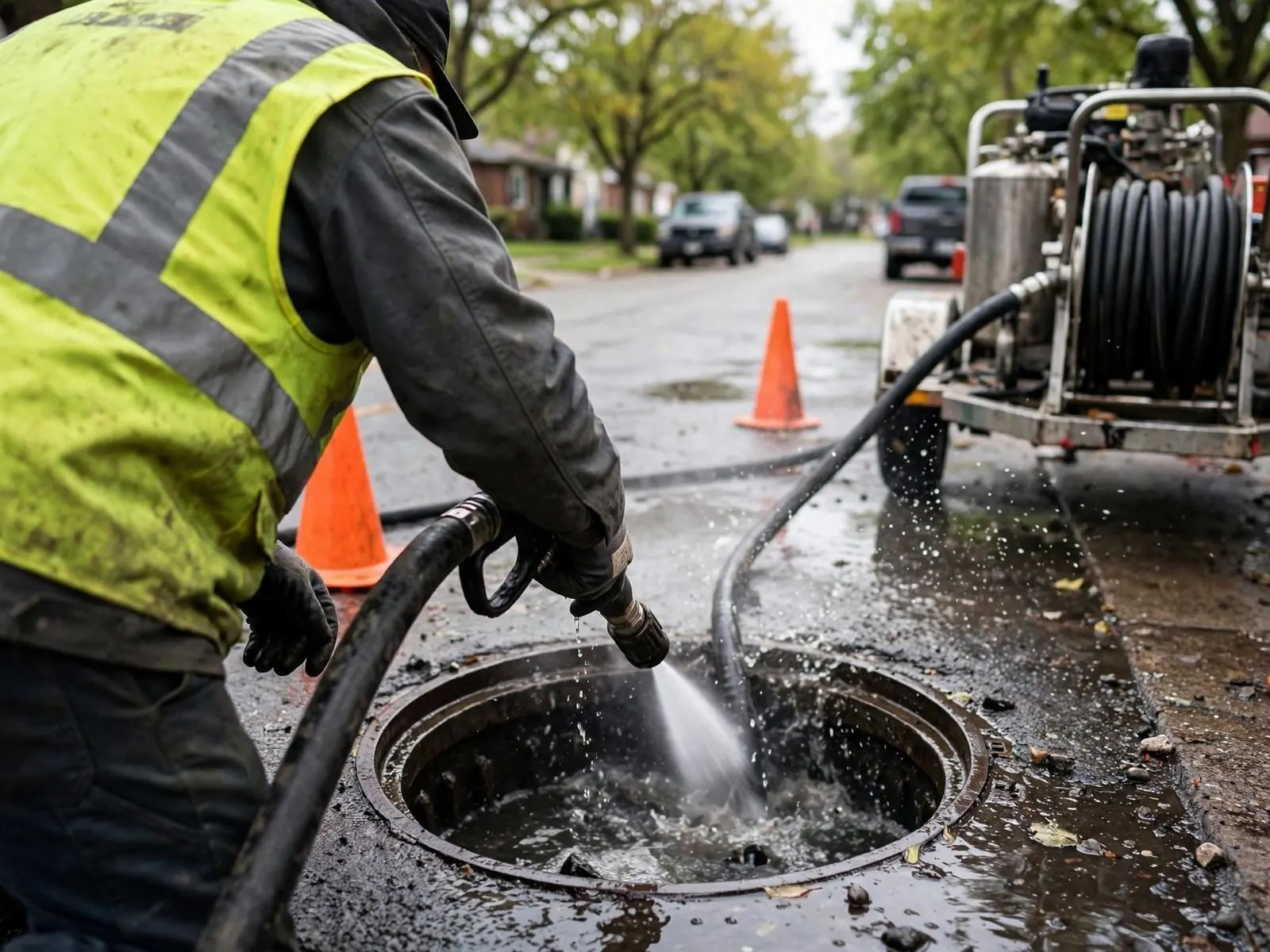
A hydro jetting machine pumps water through a hose with a specialized nozzle. Jets point backward to pull the hose forward and spray the pipe wall in a rotating pattern. Pressure ranges widely depending on the job, and a trained operator picks the nozzle and pressure for the pipe material and condition.
The result is a clean pipe wall, not just a hole through the blockage. That difference is the whole reason jetting exists.
Where it earns its place
Jetting does its best work in four situations.
- Kitchen and restaurant lines coated with grease that a cable only punches through.
- Lines that clog again within weeks of every cable visit.
- Soft or fine root growth inside intact joints.
- Scale or buildup in cast iron after decades of use, when the pipe wall is still solid.
Where it does not belong
Jetting a broken, collapsed or badly offset pipe can push water out of the break and wash soil away from the line. A cracked clay pipe, a separated joint or a section of pipe with a hole needs a repair plan first. Cleaning does not fix a missing pipe wall.
Fragile cast iron with thin walls and lines with many branches can also be risky. A good operator treats the camera view as a gate: no camera, no jetting.
Cable, jetting or both? A decision table
Match what you found with the tool most likely to solve it. Not every row ends with jetting, and that is the point.
| Condition | Best first tool | Why |
|---|---|---|
| Single hard blockage, pipe in good shape | Cable machine | Fast and targeted. |
| Repeated greasy clogs | Hydro jetting | Scours the full wall, not just the center. |
| Thick woody roots through a joint | Cutter head first, then jetting | Roots must be cut before water can scour. |
| Cracked, collapsed or offset pipe | Repair, not jetting | Water can escape and erode soil. |
| Unknown pipe condition | Camera inspection first | Prevents guesswork. |
The questions to ask before you say yes to a quote
Ask whether a camera will be run before and after. Ask what pressure range the operator uses on your pipe material. Ask where the water goes: a plumber should have a plan for the cleanout and for catching debris.
Ask what happens if the camera finds damage. A good answer is that the job stops and you get footage and options, not that jetting continues anyway.
Commercial lines along the Route 9 corridor
Restaurants, offices and light commercial buildings produce more grease and solids than a house does. For those buildings, a schedule of jetting visits often costs less than emergency backups, because the line is cleaned before flow slows. The commercial plumbing service page covers after-hours dispatch for business owners.
A grease trap or interceptor, where one is installed, is a separate system. Jetting the line downstream does not replace servicing the trap.
What to expect on the day
The crew locates the cleanout, runs a camera, then jets from the cleanout toward the street or tank. Expect noise, a hose across the yard or basement and a short period of water use restrictions. A second camera pass confirms the pipe wall is clean.
Ask for a copy of the footage. It documents the pipe's condition for you and for any future buyer.
Plan for the cleanup too. Water and loosened debris flow downstream, so a good crew sets up at the cleanout, watches the flow and keeps floors protected. Ask who handles the mess if a fixture backs up during the pass, and agree on that before the hose goes in.
What to do after the line is clean
Jetting resets the pipe. What you do next determines whether it stays reset.
- Keep grease out of drains and into a can for the trash.
- Flush only toilet paper.
- Schedule a repeat camera view if roots were present, so regrowth is caught early.
- Keep the cleanout cap accessible and labeled.
Westborough, MA note: commerce on Route 9 and a CSX yard nearby
Route 9 serves much of Westborough's commerce, and the town sits at the I-90 and I-495 junction with a large CSX freight yard nearby. That mix means many buildings with kitchens and break rooms feed the same sewer system as homes.
The practical point: if you manage a food business or a multi-tenant building on a commercial corridor, ask your plumber for a maintenance jetting plan rather than waiting for an emergency backup.
Whether a building connects to town sewer or a private system should be confirmed with the town. Permit rules vary, so ask the Westborough Building Department at 34 West Main Street before any repair that follows a camera finding.
Treat hydro jetting as a precision tool and the quote becomes easy to judge. Hydro jetting service fits grease and scale in sound pipe, and the camera decides the rest. Businesses and homeowners in Westborough, Northborough and Shrewsbury can ask for the camera footage on any visit.
Hydro jetting a sewer line: questions answered
It depends on the pipe wall, not the age. A camera should confirm the pipe is intact. Sound cast iron and clay can often be jetted at a suitable pressure. Cracked, collapsed or thin pipe should be repaired first.
A cable punches or cuts through a blockage and leaves a hole the size of the cutter. Jetting uses water to scour the pipe wall for its full circumference, removing the coating that makes new clogs form.
Fine roots, yes. Thick woody roots must be cut first with a mechanical head, then the pipe can be jetted clean. Roots return unless the joint they entered through is repaired.
Usually not as a routine. It is useful for homes with repeated grease clogs or heavy buildup. A camera visit tells you whether a one-time jetting makes sense.
Dispatch covers commercial buildings in Westborough around the clock. Ask for a camera first, a clear scope for the jetting pass and a written note on the pipe's condition so building managers have a record.
Want a licensed plumber to look at it? Call (508) 389-4045
Plumbing problem in Westborough?
Call dispatch any hour and get a clear price before work starts.