
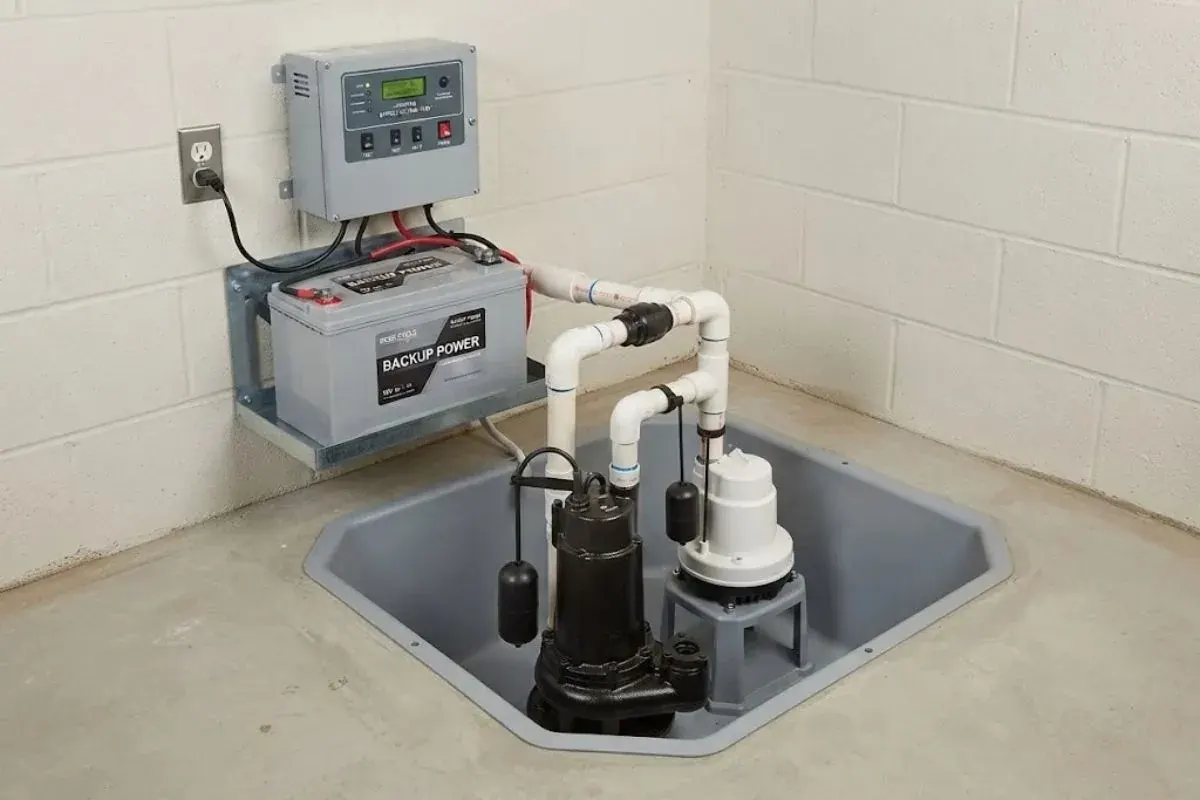
Why an alarm is worth more than a second pump
A second pump handles a failure. An alarm tells you a failure is happening. Without the alarm, a stuck float can leave a healthy pump idle while the pit overflows, and you will not know until water reaches the floor.
An alarm also catches a pump that is running but cannot keep up, such as during a long rain or snowmelt. The water level keeps climbing even though the motor hums, and the alert gives you time to move belongings and call for help.
Choosing an alarm type
Alarms differ in sensor design, power source, and how they notify you.
| Type | How it works | Strengths | Watch for |
|---|---|---|---|
| Float-switch alarm | A float rises and closes a circuit | Simple, inexpensive | Floats can stick or tangle. |
| Probe or conductivity alarm | Two probes sense water contact | No moving parts | Probes need cleaning. |
| Pump-integrated alarm | Built into a pump controller | Fewer separate parts | Fails if the controller fails. |
| Wi-Fi water sensor | Sends a message to your phone | Alerts you away from home | Needs reliable Wi-Fi and power. |
| Battery backup alarm | Alerts on low battery or backup running | Tells you when power is out | Batteries need testing. |
Where the sensor goes
Mount the alarm sensor above the normal pump turn-on level and below the rim of the pit. If it sits too low, it will chirp on every normal cycle. If it sits too high, the alert comes when water is already spilling.
Keep the sensor clear of the pump's discharge line, the main float, and the power cord, which can tangle. The alarm unit itself belongs where you will hear it, such as on a basement wall near the stairs, not in a corner behind a utility shelf.
Pair the alarm with backup power
Storms that raise the water table often knock out power. A battery backup pump gives you hours of operation, and a battery alarm warns you when the backup is running or the battery needs replacement. Test the system twice a year by lifting the float and listening for the alarm.
If you are weighing a full pump replacement along with the alarm, see our sump pump installation and repair page. Check valve placement, discharge pipe routing, and an outlet on a dedicated circuit all matter.
What a plumber checks during the install
A good installation looks at the whole pit, not only the alarm.
- The pit liner, lid, and whether the pit is clear of debris.
- The main float's free travel and the pump's rated capacity.
- A check valve on the discharge line to stop back flow.
- The discharge route, which should drain well away from the foundation.
- A tested outlet, ideally protected by a ground fault circuit interrupter.
- A written test of the alarm and the backup battery.
A short maintenance rhythm
Pour a bucket of water into the pit every spring and fall and watch the pump run. Listen for grinding, listen for the alarm, and look for floats that rub the pit wall.
If water enters the basement even when the pump works, the problem may be the drainage around the house rather than the pump. In that case basement waterproofing is the next conversation, not a bigger pump.
Common alarm mistakes
The first mistake is mounting the sensor so low that it sounds on every normal cycle. Owners then silence it, and a silenced alarm protects nothing. Set it a few inches above the pump's normal turn-on level.
The second mistake is skipping the test. Alarm batteries fade, probes collect film, and floats stick. A test twice a year takes two minutes and catches all three problems.
The third mistake is placing the alarm where nobody will hear it. A basement alarm in a house with a finished upper floor needs a loud unit or a phone alert. If you travel often, a Wi-Fi sensor sends a message while you are away, but it needs a working router and a power source, so pair it with a battery.
After a storm
Once heavy rain passes, check the pit before you assume all is well. Look at the water level, listen to the pump, and confirm the discharge pipe outside is flowing freely and not frozen or clogged with leaves.
If the alarm sounded at any point, write down the date. Repeated alarms in a season tell you the pit works hard, and that is useful information for a plumber who is judging pump capacity.
Westborough, MA note: waterways and basement water
Westborough holds the headwaters of the Sudbury and Assabet rivers, and the town has Lake Chauncy, Sandra Pond (the Westboro Reservoir), and Hocomonco Pond. That is a landscape with a lot of water at the surface.
The practical lesson is general, not property-specific: homes close to ponds or low ground are more likely to see seasonal water around foundations. We cannot say what your lot does, so watch your pit after heavy rain and test the alarm before the season, not during it.
An alarm costs little compared with a flooded basement. If you want a licensed plumber to review your pit, we serve Grafton and Shrewsbury along with Westborough.
Write the test date on a label near the pit so the next check is easy to schedule.
Sump pump alarm installation: questions answered
Yes. If water is rising in your pit, call the 24/7 line. Shut off electrical equipment standing in water only if you can reach it safely, and keep out of a flooded basement with live outlets.
Loud enough to hear from the living area. A small buzzer in a far corner is easy to miss.
Yes, many do. Choose one with a low battery chirp and test it on a schedule.
No. It warns you. A backup pump keeps water out when the main pump fails.
The hardware is the same. Grafton has several villages along the Blackstone River with older mill-era homes, so basement conditions vary from street to street. Ask about the pit and discharge route on your property.
Want a licensed plumber to look at it? Call (508) 389-4045
Plumbing problem in Westborough?
Call dispatch any hour and get a clear price before work starts.