
Rung one: confirm it is the main line, not one fixture
Run the kitchen faucet for a minute. Flush the upstairs toilet. Check the lowest drain in the house, usually a basement floor drain or a basement shower. If water backs up there while upstairs fixtures still work, the main sewer line is blocked downstream of every branch.
A single slow sink is a different problem. That one belongs to drain cleaning for the branch line, and it needs a smaller tool.
Rung two: stop adding water and look for the cleanout
Stop running water the moment you suspect a main line clog. Every flush or load of laundry adds more wastewater to a pipe that cannot take it, and the lowest fixture will overflow first. Keep people away from any standing sewage and wear gloves if you must clean up.
Look for the sewer cleanout, a capped pipe of about three or four inches in diameter near the basement wall or outside near the foundation. If the cap is cracked or the pipe is full of liquid, that confirms a blockage and tells a plumber exactly where to start.
Rung three: what to do yourself and what to leave alone
Hardware stores sell sewer augers and drain chemicals, and both can make a main line problem worse when used without a diagnosis. The table separates the tasks that fit a careful homeowner from the ones that do not.
| Task | Homeowner? | Why |
|---|---|---|
| Stop water use and locate the cleanout | Yes | Costs nothing and protects the floor. |
| Open a cleanout cap slowly to relieve pressure | Only with gloves and a bucket | Backed-up sewage can rush out. |
| Pour a chemical drain cleaner into the main | No | It sits behind the blockage, damages pipe and hurts the technician who arrives later. |
| Run a rented sewer machine | Rarely | Cable can snag, kink or cut the pipe and leave you with a bigger problem. |
| Camera inspection and root cutting | No | Needs trained eyes and the right blades. |
| Hydro jetting | No | High-pressure water must be used by a trained operator. |
Rung four: why the pipe clogs in the first place
Most main line clogs come from four causes. They are tree roots entering at joints, grease that cools and hardens into a plug, so-called flushable wipes that do not break down, and a sagging section of pipe that holds water and collects solids. Each cause leaves a different clue.
A line that clogs once a year, always in spring, often has roots. A line that clogs after a holiday of heavy cooking may have grease. A line that clogs again within weeks of cleaning probably has a belly or a break that cleaning cannot solve.
Rung five: the professional tools, in the order they are used
A licensed plumber usually works through three tools, each one answering a question the last one raised.
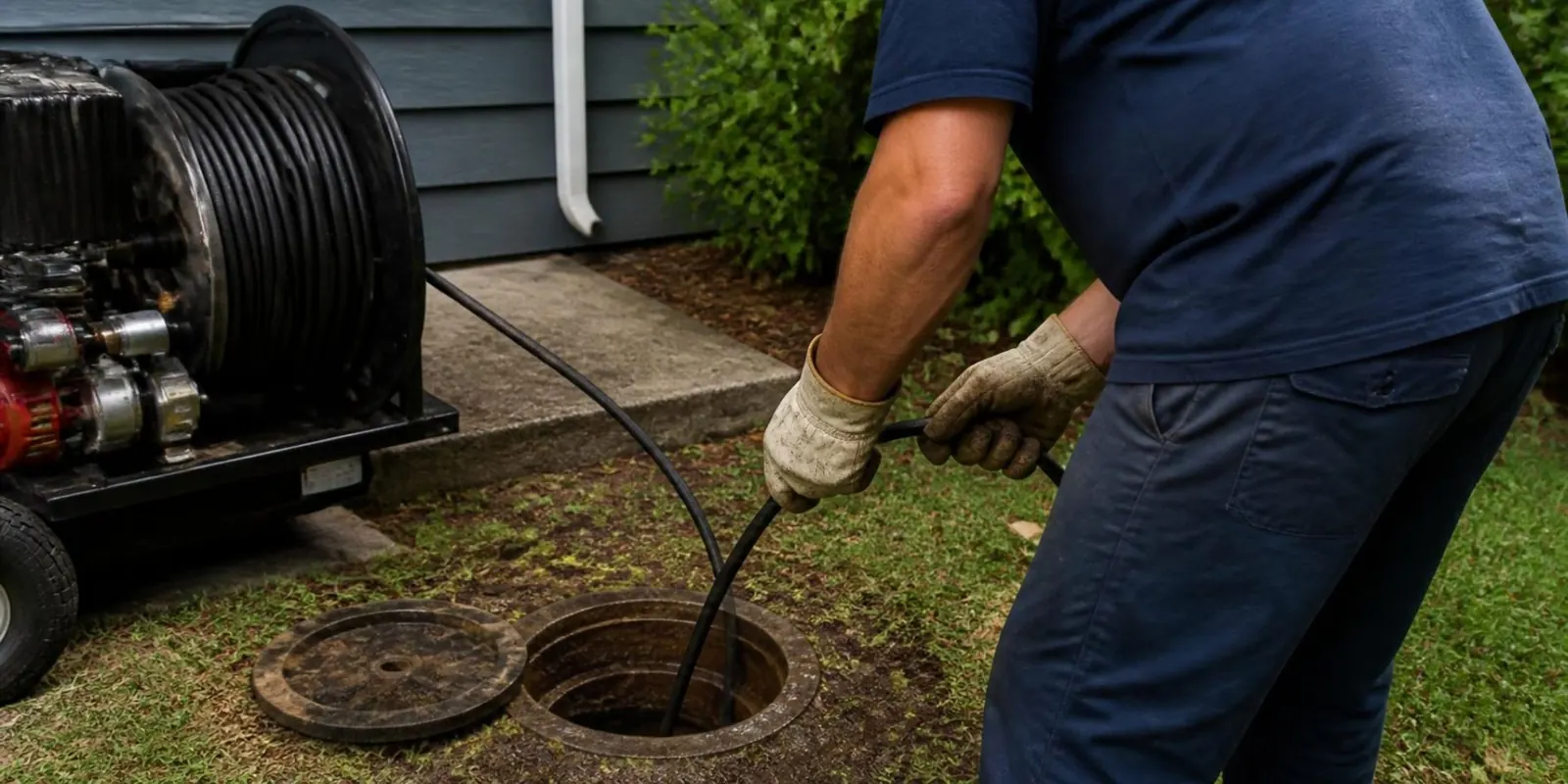
- A cable machine with a cutter head clears a soft blockage and roots near the cleanout.
- A sewer camera shows pipe material, joints, cracks, bellies and the location of the blockage.
- Hydro jetting scours the pipe wall when grease or scale is the cause, as covered in our hydro jetting page.
- A pipe locator marks the depth and path of the line for any repair that follows.
Rung six: when clearing is not enough
A camera that shows cracked clay, offset joints, or a long run of cast iron flaking from the inside is telling you the pipe is the problem, not the blockage. Repeated clearing in that situation buys time but not a solution.
At that point the options are spot repair, lining or replacement. Each has trade-offs in cost, disruption and lifespan, and a licensed plumber should walk you through them with the camera footage in hand. The details live on the sewer line repair page.
Protecting the line after it is open
Put grease in a can, not the drain. Flush only toilet paper, even if a package says flushable. If roots caused the clog, plan for a maintenance cut on a schedule that matches how fast they regrow, which the camera inspection can estimate.
Keep the cleanout cap accessible. A cleanout buried under mulch or shelving turns a quick call into a long one.
Westborough, MA note: old streets and old pipes
Westborough was incorporated in 1717 and has historic districts, including the Vintonville Historic District and the West Main Street Historic District. Homes in older parts of town may sit on sewer laterals that predate modern pipe materials.
The practical consequence is simple. If your house is in or near an older district and the main line clogs, ask for a camera inspection before agreeing to repeat clearing. The footage shows whether the pipe is clay, cast iron or plastic, and whether roots or offsets are the real cause.
Confirm with the town if your address is on town sewer or a private septic system before any work starts, because the repair path is different for each.
Climb the ladder only as far as the symptoms require. For a confirmed main line blockage, sewer line cleaning service followed by a camera inspection gives you the clearing and the explanation in a single visit. The same dispatch covers Southborough and Grafton.
Clogged sewer line cleaning: questions answered
Several fixtures back up or gurgle at the same time, the lowest drain in the house overflows first, or water appears in a basement floor drain after laundry. A single slow fixture usually means a branch clog instead.
No. Chemical cleaners rarely reach a blockage deep in a main line, they sit in the pipe and can damage it, and they create a hazard for the person who arrives to clear it. Ask the plumber if a chemical product has already been used.
It is the only way to see why the line clogs. If the camera shows roots or grease, cleaning may be enough. If it shows a break or a belly, the clog is a symptom and the pipe needs repair.
There is no fixed interval. Lines with roots or a history of grease may need cleaning every one to two years. Lines in good condition may never need it. A camera visit tells you which group you are in.
Find the cleanout, ask the plumber to run a camera on the first visit, and confirm with the town if your property uses public sewer or a private system. Older streets near the historic districts often have older lateral pipe, so the camera result matters.
Want a licensed plumber to look at it? Call (508) 389-4045
Plumbing problem in Westborough?
Call dispatch any hour and get a clear price before work starts.